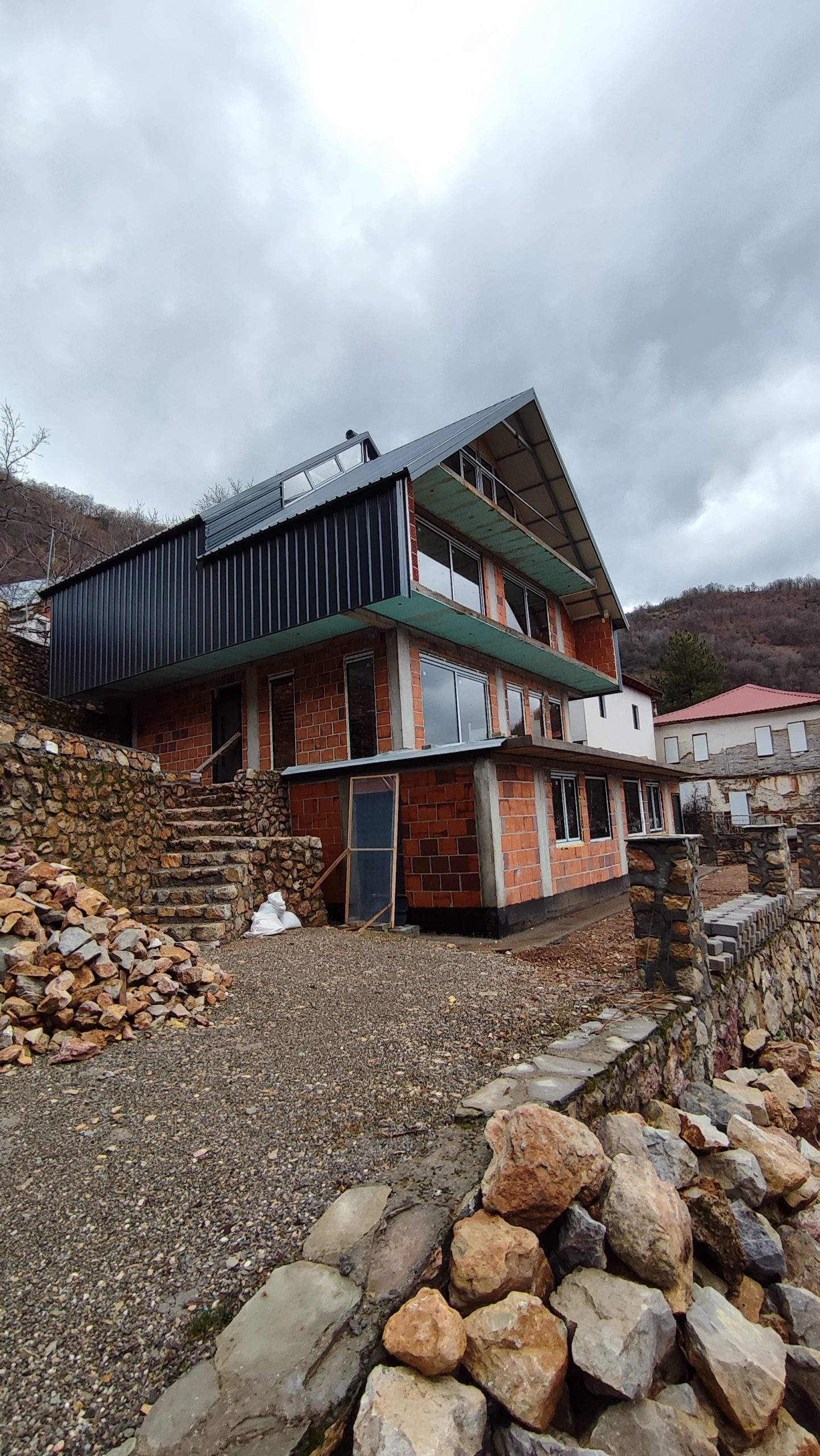
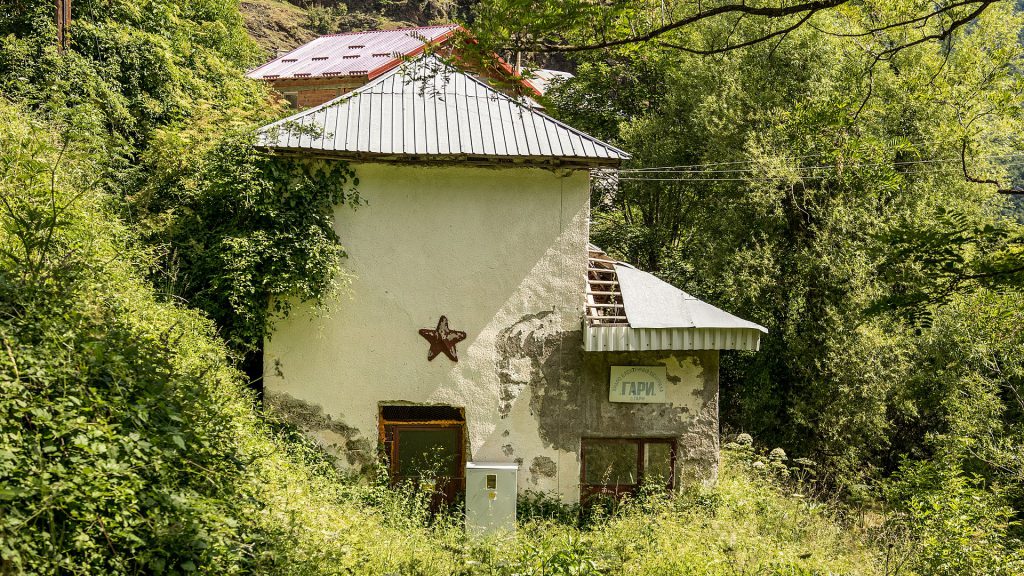
As the first capital facility in the village, it can be said that the Garska Reka Hydropower Plant represents one of the most significant investments in the village. It was put into use way back in 1949 and at that time it was a great joy for the villagers.
Thanks to the Village Cooperative, in 1956-1957, a larger facility was built at the entrance to the village, the joint home – Rug Factory. This facility had a rug workshop for textile products, a workshop for dairy products, storage rooms and administrative and management rooms. The rug factory is in good condition to this day, where for 25 years the locals have gathered in St. John’s Hall for the Epiphany, which is traditionally celebrated in the village. The capacity is for 250 people, equipped with kitchen, toilet and heating.
In 1958, the construction of another large facility began – the village water supply. The construction of this building was carried out by the Cooperatives. By digging the canals from the Glava spring and by developing the water supply network in the village, water was brought to every house in the village.
The Stogovo Retirement Home was built in the middle of the village, where a shop is currently located. The store operates only in the summer period and is stocked with basic products. The home served to care for the elderly. In the late eighties, there was also a kitchen that was open 365 days a year to make life easier for pensioners all year round. There were also regular medical controls. There are also 4 bedrooms in the home.
In 1927, the Police Station was built, which still exists today. It is located on the other side of the river close to the village cemetery. Tenants are accommodated in it and it is well preserved.
The first school was mentioned in 1864 and at the beginning the teacher taught the children in his home. It had about 20-30 students. Around 1900, the first school was built, but the working conditions continued to be difficult. Teaching was done without any means, and instead of desks, the children gathered in a circle with their legs crossed, and the teacher was in the middle. In the school year 1947/48, the new school named Gotse Delchev was built. It had 4 large classrooms, three small classrooms, an office and two spacious corridors. The basement rooms were used for the school kitchen and dining room. In a certain period, the number of students reached 130 children. There were also students from the nearby villages of Osoj and Mogorce. The building in which the Gotse Delchev school was located is still in good condition and the villagers of Gari take care of its functionality. It is currently rented.
For the successful development of the cultural and entertainment life in the village, cinema equipment was purchased, which was placed in the youth center, and the villagers of Gari had the opportunity to watch a film program twice a week. In the village there was also a Cultural Art Society, which bore the name Stogovo, just like the football club. The daily newspaper was regularly received in the village and there was also a library with over 2000 books.
It should be noted that during the time of the Cooperative, shepherding and carpet weaving reached their maximum. There were over 15,000 sheep and the famous Gar cheese and cheese were produced. The carpet factory worked at full capacity, and the carpets were sold on foreign markets. Heavy blankets, female and men’s scarves were also produced.

Ристески

Бисовски

Вила Топила
Црква
Килимара
Хидроцентрала
Поповски
Лазаревски
1.

2.

Арсовски
3.
4.
5.
6.
7.
8.
9.
10.
11.
12.
13.
14.
15.
16.
17.
18.
19.
20.
21.
22.
23.
24.
25.
26.
27.
28.
29.
30.
31.
32.
33.
34.
35.
36.

37.

38.
39.
40.
41.
42.
43.
44.
45.
46.
47.
48.
49.
50.
51.
52.
53.
54.
55.
56.
57.
58.
59.
60.
61.
62.
63.
64.
Лазаревски

65.
66.
67.
68.
69.
70.
71.
72.
73.
74.
75.
76.
77.
78.
79.
80.
81.
82.
83.
84.
85.
86.
87.
88.
89.
90.
91.
92.
93.
94.
95.
96.
97.
98.
99.
100.
101.
102.
103.
104.
105.
106.
107.
108.
109.
110.
111.
112.
113.
114.
115.
116.
117.
118.
119.
120.
121.